The St. Regis Bal Harbour Resort has done it again. In the Forbes Travel Guide 2026 Star Awards, the resort was one of only five properties across Miami and Miami Beach to earn the Five-Star rating, and The Spa at St. Regis Bal Harbour was rated Five-Star alongside it. That makes 14 consecutive years. For Antonio Cuellar, a Five-Star hotel photographer in Miami who recently photographed the resort, the announcement landed close to home.
Antonio Cuellar’s work covered the resort’s suites, spa, bar lounge, lobby and arrival experience. Photographing a property like this means matching the standard the hotel sets for itself, and at The St. Regis Bal Harbour that standard is very high.
Why Forbes Five-Star Matters
Forbes Travel Guide is one of the few rating systems in hospitality that uses anonymous inspectors. They pay their own way and experience a property exactly as a guest would, and the rating weighs service more heavily than facilities. In other words, a Five-Star rating is earned by people, not just by marble and views. The inspectors’ notes on The St. Regis Spa at Bal Harbour are published on the Forbes Travel Guide site.
That service culture was obvious from the moment Antonio Cuellar’s crew arrived on property.
The Shoot: Two Days, Twelve Images
On paper, this was a relatively small project: 12 final images. But at a hotel of this caliber, every detail in the frame matters, from the line of a pillow to the reflection in a glass tabletop. So the team took two full days to shoot it.
Antonio Cuellar worked with an assistant, a stylist and a digital tech. The digital tech was only available for one of the two days, so the schedule was planned around that, with the most technically demanding setups placed on the day the full crew was on set.
The St. Regis Bal Harbour team made that kind of planning easy. Shot lists were agreed in advance, rooms were prepared and held when needed, and housekeeping, engineering and the spa staff were often a step ahead of the crew. On a shoot where every room is its own lighting problem, that coordination is what keeps the day moving. From the first planning call to final delivery, it was one of the smoothest productions Antonio Cuellar has worked on.
Inside the Suites: Light, Space and the Atlantic
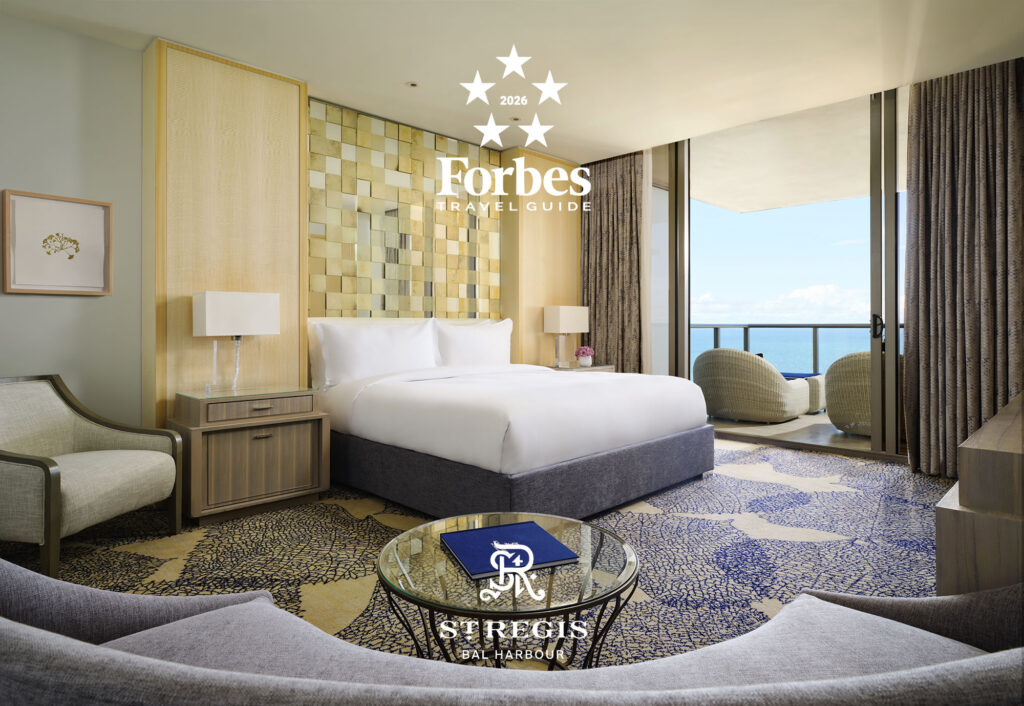
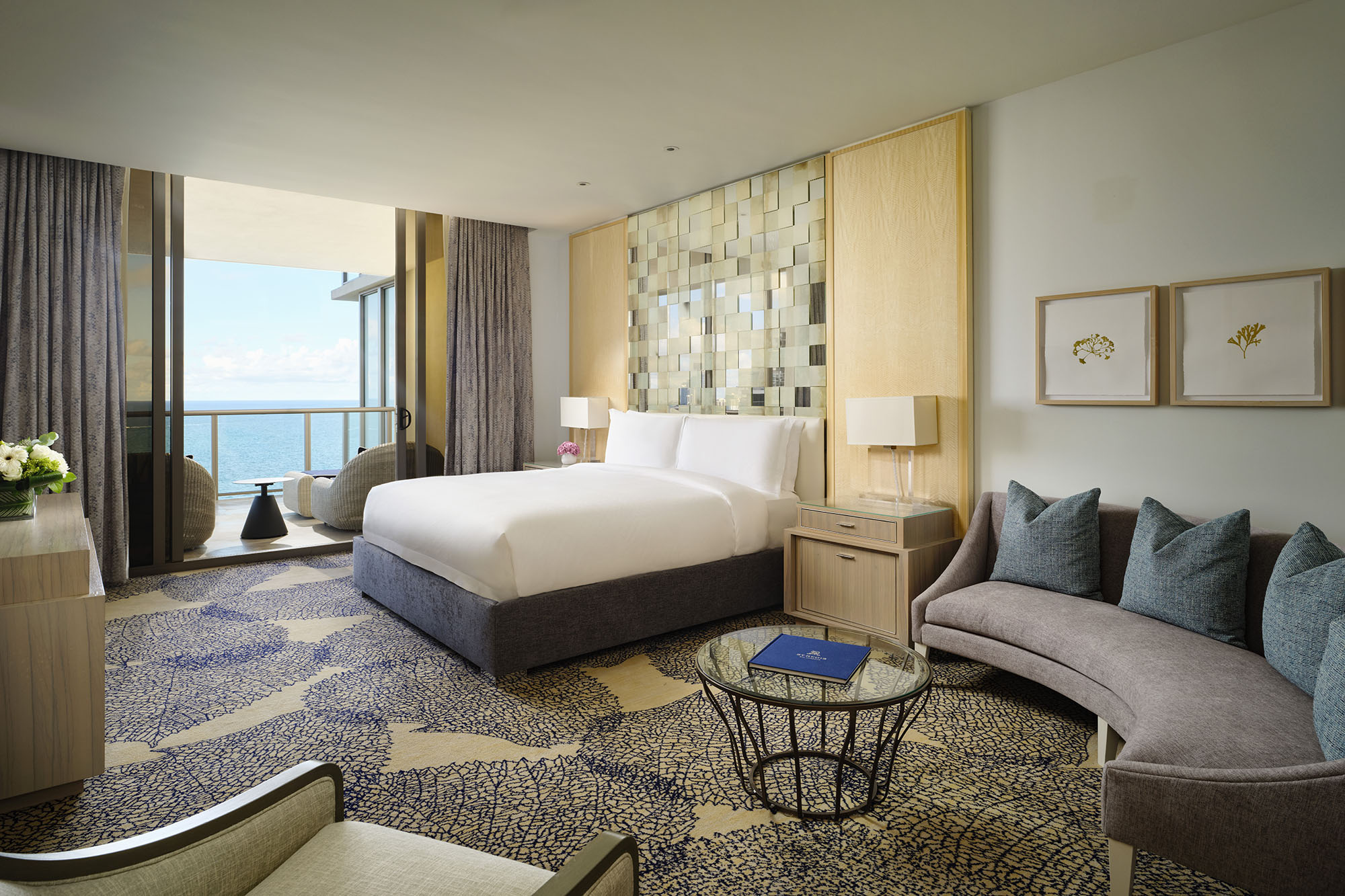
The suites at The St. Regis Bal Harbour are built around the ocean. Floor-to-ceiling sliding doors open onto private balconies, and the Atlantic is visible from the bed. Sycamore-toned paneling frames a faceted mirror headboard wall, and the carpet’s blue sea-fan pattern picks up the color of the water outside.
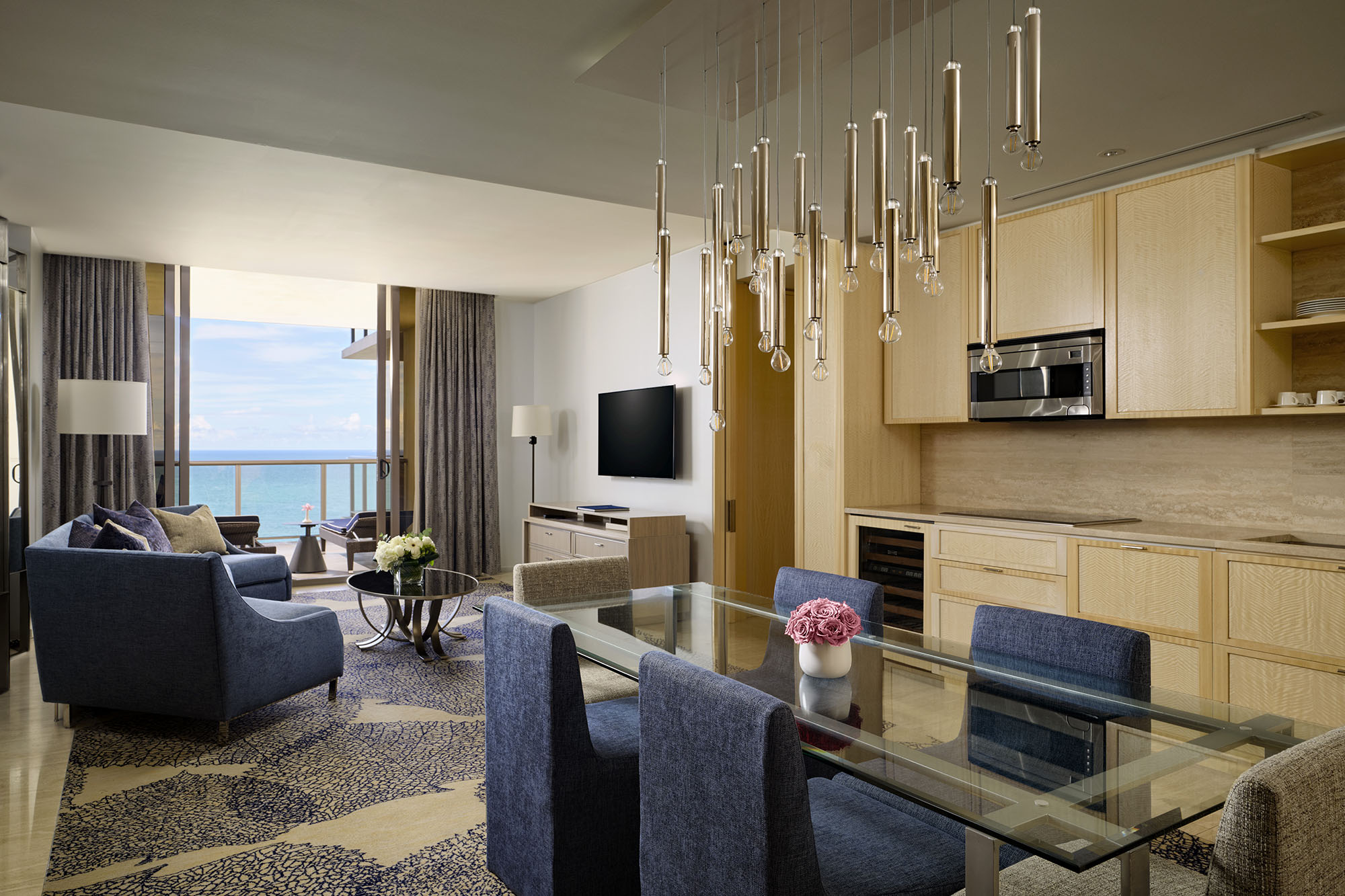
The larger suites feel more like private residences than hotel rooms. A spacious living room opens into a full dining area and kitchen under a cluster of bronze pendant lights, with the ocean in view from almost everywhere.
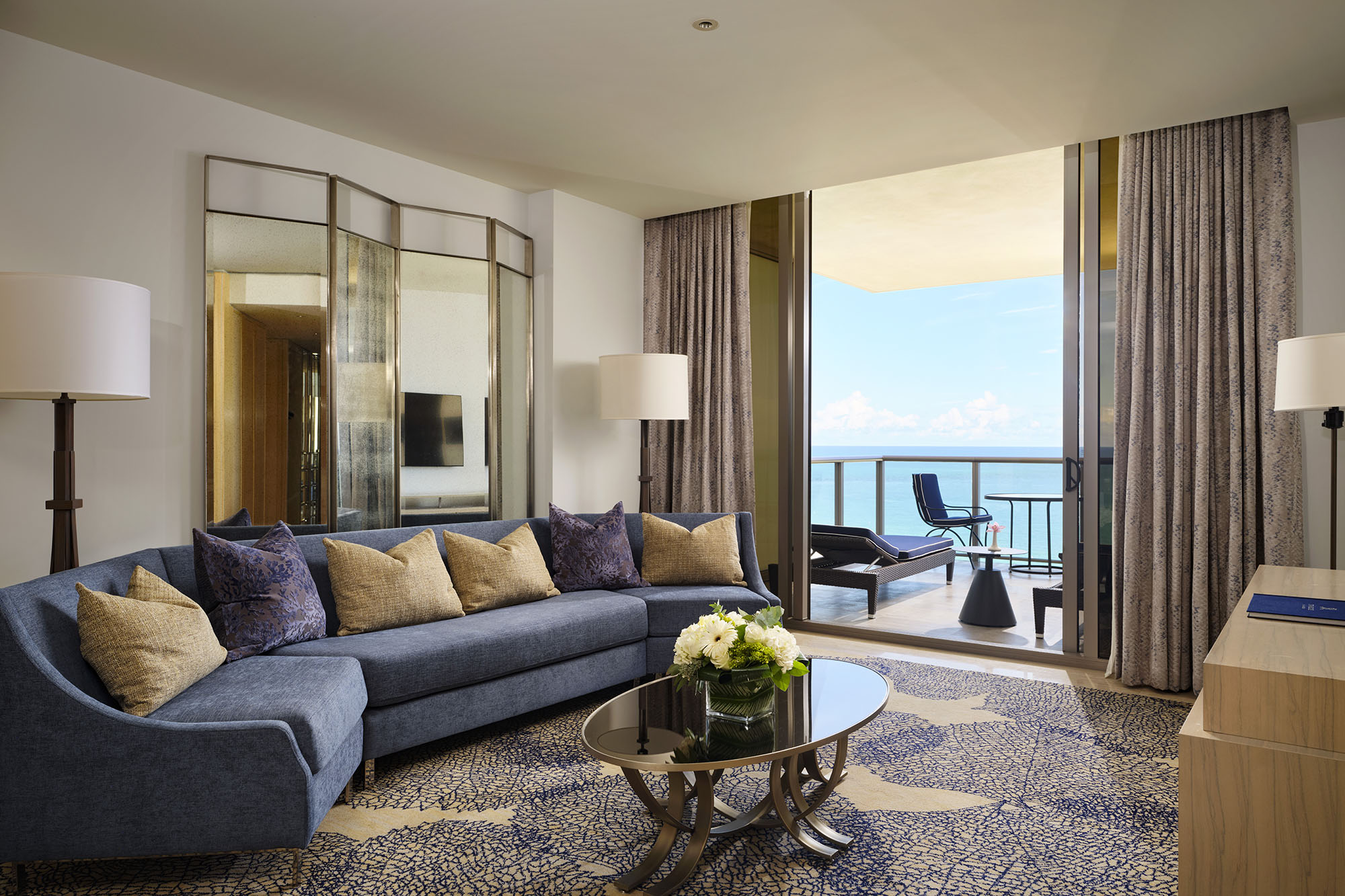
Unobstructed Ocean Views
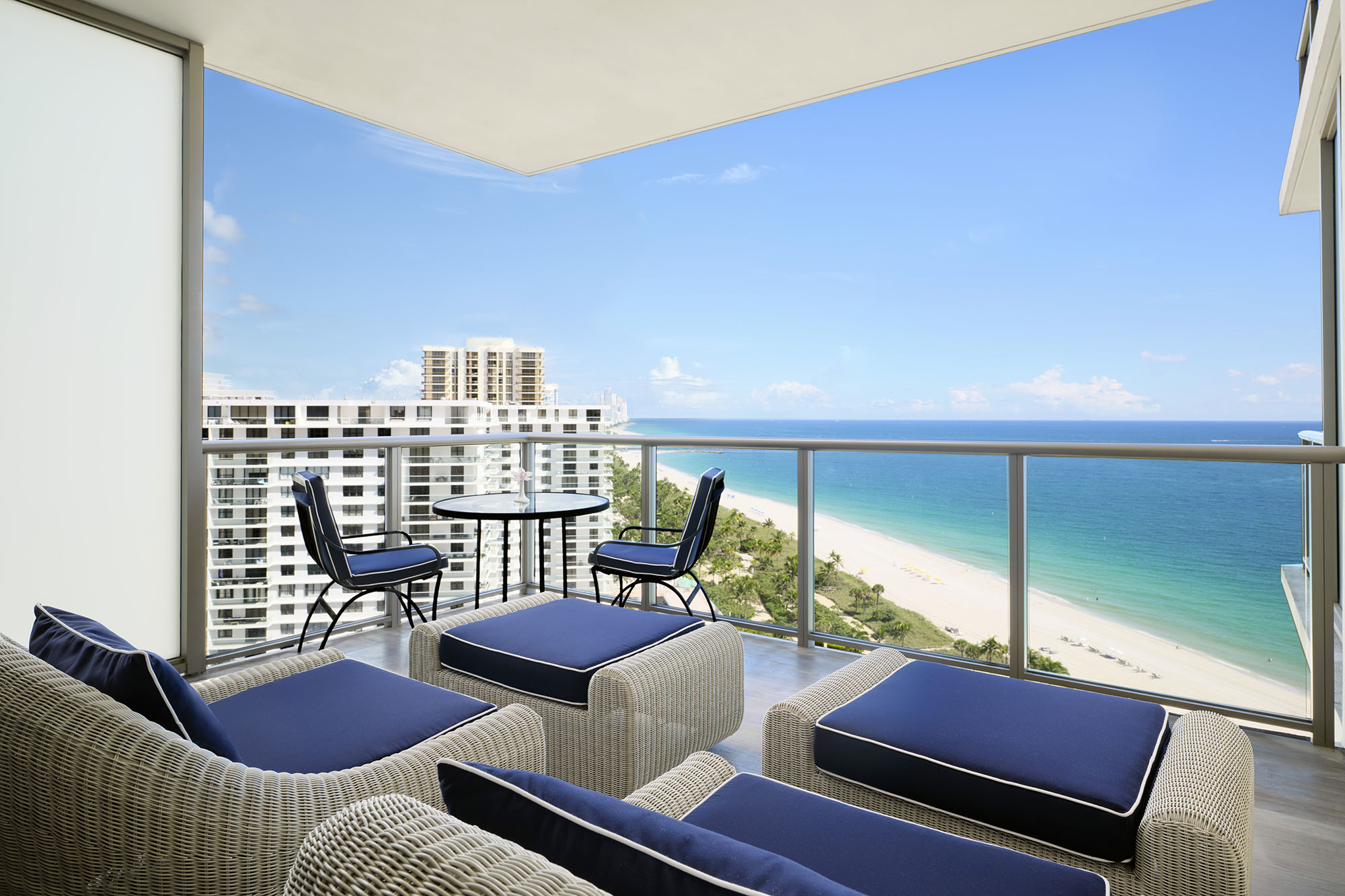
The balconies are where the property earns its address. From the upper floors, the view runs along the white sand of Bal Harbour all the way to the horizon. Here the goal was to keep the water its true color while holding detail in the wicker furniture and navy cushions in the foreground.
The Lobby, the Spa and the Bar Lounge
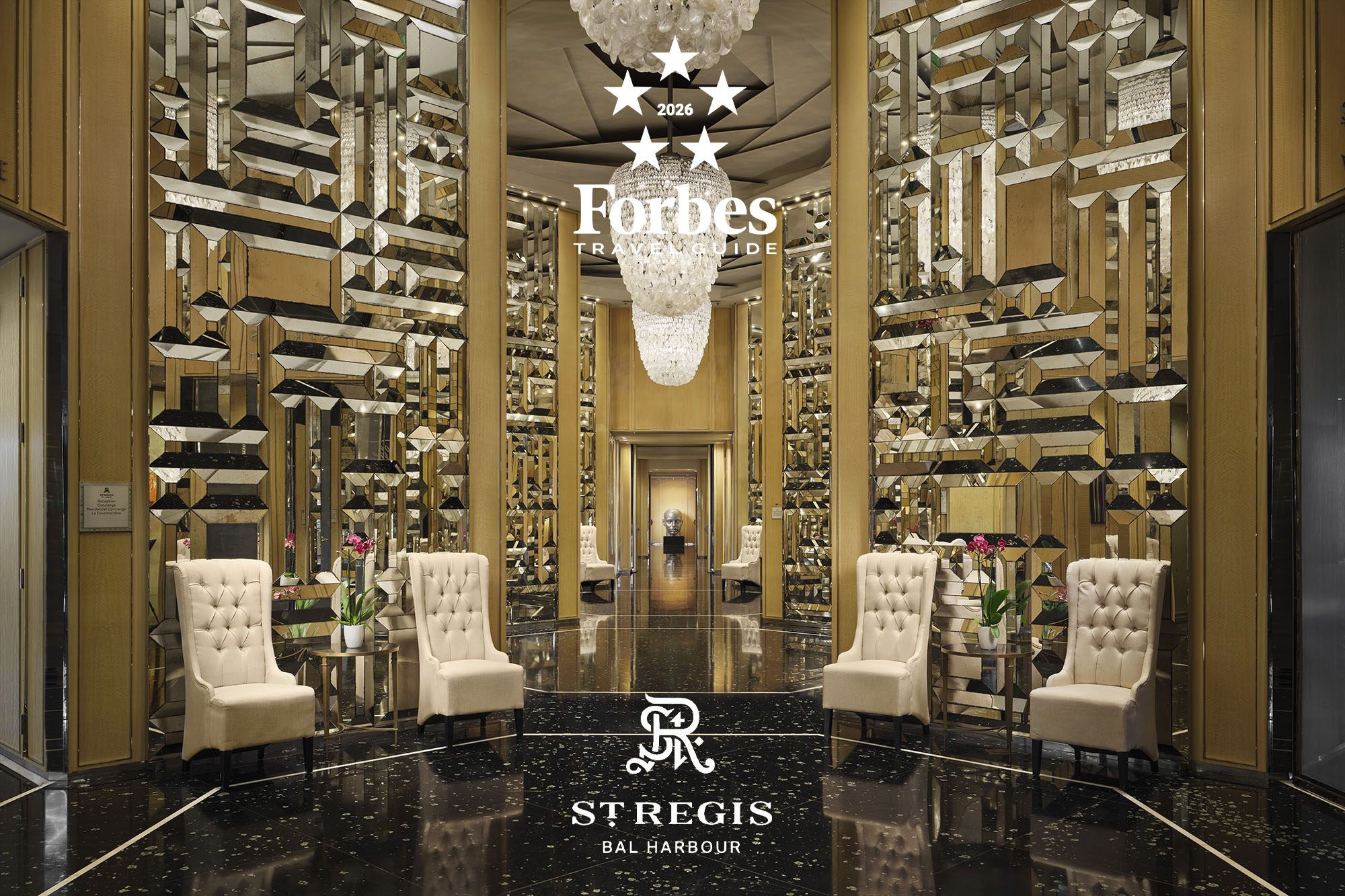
The lobby is lined with faceted mirror walls under a cascading crystal chandelier, set on a polished black terrazzo floor. Mirrors are hard to photograph because any light placed in the room tends to show up in the frame.
Lobbies are always the most challenging shots on a hotel job because of the foot traffic, and that is even more true at a luxury property, where disturbing guests is kept to an absolute minimum. A Five-Star hotel does not close its lobby for a photographer, and it shouldn’t. The crew had to work quietly and patiently, setting up without getting in anyone’s way and capturing the room in the short windows when it was clear.
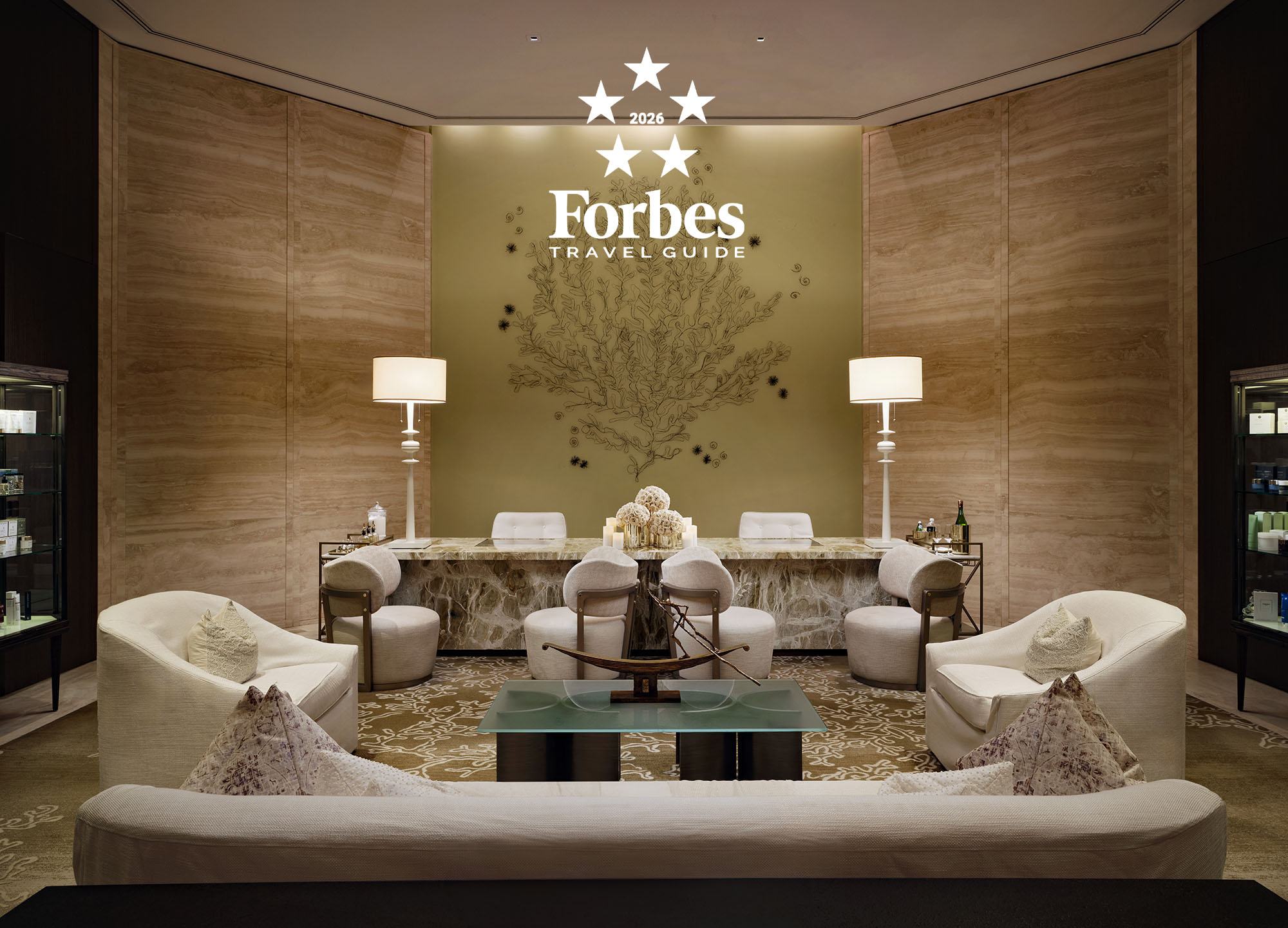
The Five-Star spa is calm and warm. Travertine walls, sculptural coral artwork and soft pools of lamplight set the mood in the reception lounge.
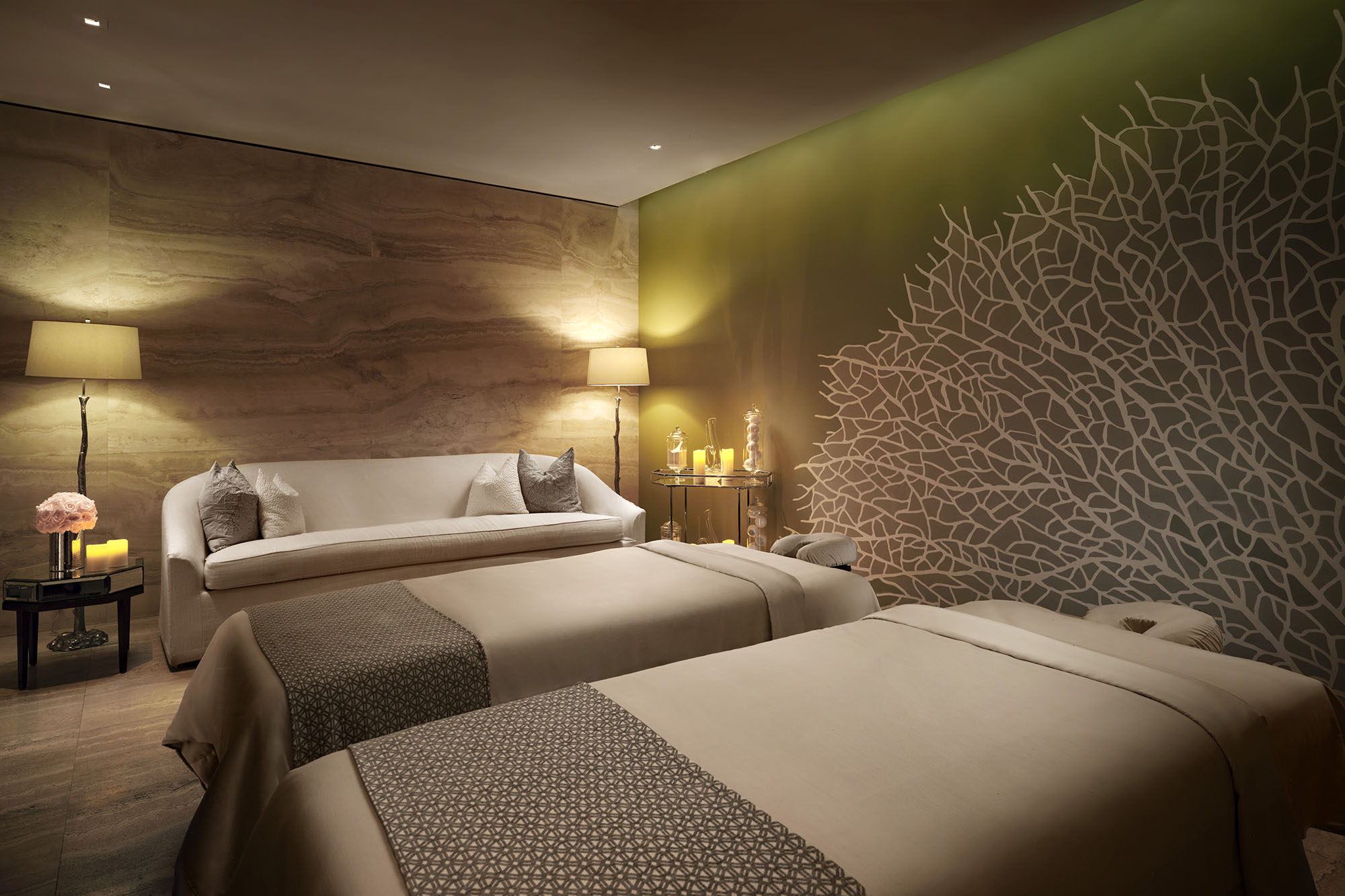
The couples treatment room carries the coral theme into a large mural, lit by candles and floor lamps.
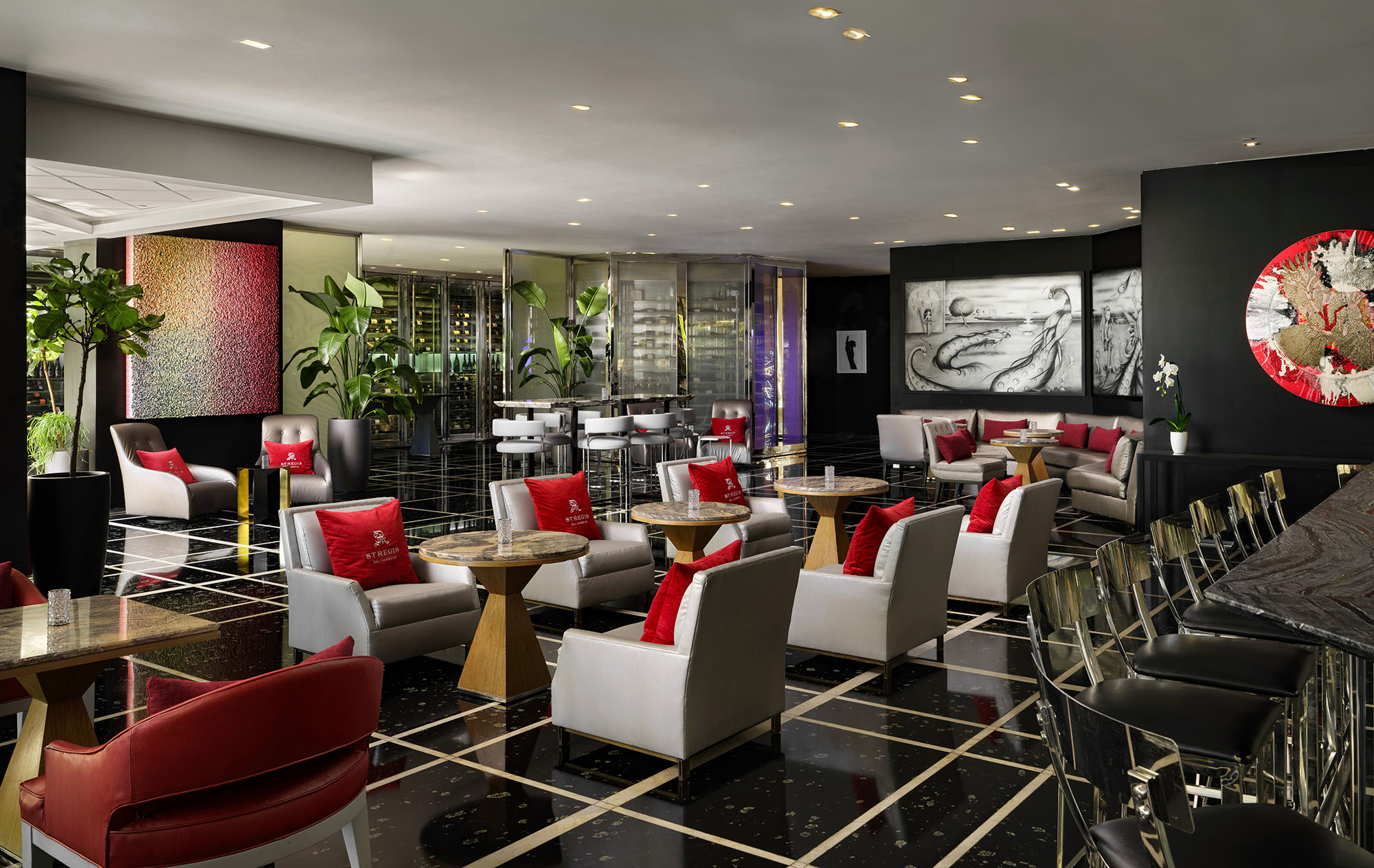
The bar lounge changes the palette completely: silver leather armchairs, signature red St. Regis cushions, a glass-walled wine display and bold contemporary art.
The St. Regis Bentley House Car
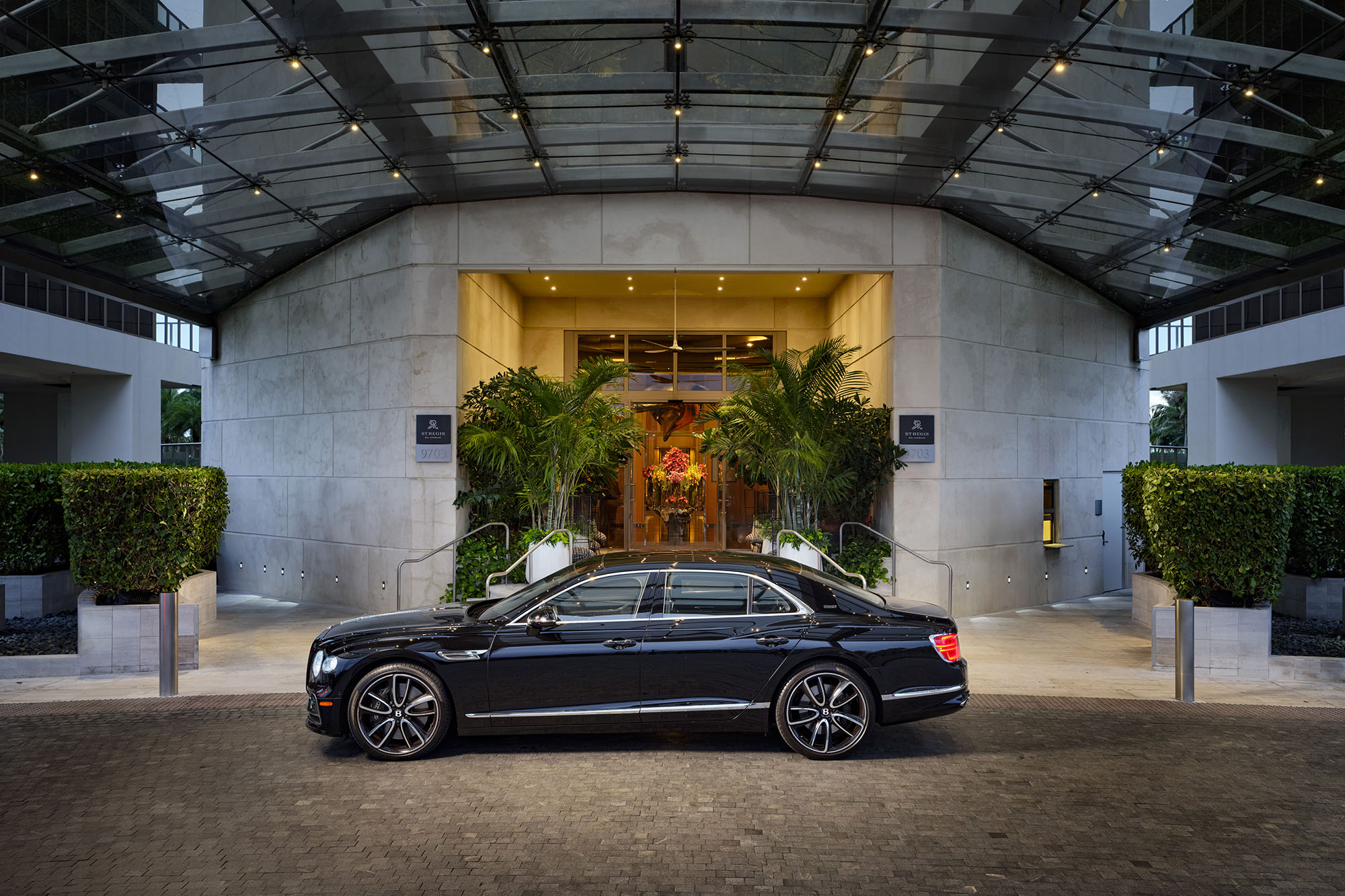
One of the most memorable images from the project shows the resort’s Bentley waiting under the glass porte-cochère at dusk. St. Regis has a long partnership with Bentley Motors and uses Bentley as the house fleet for its hotels and resorts, a match built on shared values of craftsmanship and understated luxury.
At Bal Harbour, the Bentley is available to guests as a chauffeured house car. It’s a complimentary way to get to dinner, cross over to the boutiques of Bal Harbour Shops or simply see the neighborhood in style. Guests book it through the concierge, and since it is offered on availability, it’s worth asking early on busy weekends.
The Photography: Making the Light Invisible
Every image in this series follows one rule: the light should be invisible. A guest looking at the photographs should see a room lit naturally by the sun and the hotel’s own lamps, with no trace of the strobes, gels and stands it took to get there. That made this one of the most technical lighting productions Antonio Cuellar has done on a hotel shoot. It’s the same discipline he teaches in his architectural photography workshop.
The cameras and lenses
Several cameras were used on this project. The main pairing was the Hasselblad H6D-100 with the HC 28mm lens. Alongside it, Antonio Cuellar shot with the Fujifilm GFX 100 and the GF 20-35mm F/4 lens, which may be his favorite lens of all time. Its distortion control is remarkable for a wide zoom, and it adapts to almost any interior.
The GFX 100 took a long time to dial in. Getting its color to match the Hasselblad files took a lot of testing, which is why the Hasselblad always comes along on every job: it remains the color reference the rest of the files are matched to.
Matching tinted glass in the suites
The suites use tinted, blue-toned glass on their windows and balcony doors. That glass pushes the daylight coming through it from a neutral 5,500K to roughly 9,800K, much cooler than the Broncolor flash heads used to light the interior. Left uncorrected, the room would read warm and the view would read blue, and the image would look obviously lit.
To match them, each strobe was fitted with a full CTB (Color Temperature Blue) gel so the flash would sit in the same cool range as the window light. It is never that easy, though. The glass also added a green shift on the green–magenta axis, so a 1/4 Plus Green gel was layered over the CTB. With interior and exterior light matched at the source, the whole frame could then be corrected as one, keeping the ocean true and the white bedding clean.
A note on the numbers: Antonio Cuellar is aware that standard mired calculations and color meters indicate a full CTB on a 5,500K flash should land much higher than 9,800K. Those figures, however, assume ideal conditions. Antonio Cuellar developed a personal app that calculates real-world color correction values based on the specific flash brand and power level of the units in use and, more importantly, on how gels behave in combination with one another. In this case, the full CTB was paired with a 1/4 Plus Green, and that combination landed at the color temperature the tinted glass required. Email me if you are interested in this app.
The restaurant, bar and public spaces
The bar lounge, restaurant and other public areas had the same complications wherever windows were in the frame, and each space needed its own gel combination, worked out on set. Once the windows were out of the composition, the work became more familiar, and the focus shifted to controlling reflections in mirrors, glass tables and polished stone.
The spa
The spa needed a different approach. With no daylight to compete with, the goal was to match the strobes to the warm glow of the lamps and candles. A full CTO (Color Temperature Orange) gel brought the Broncolor flashes down from 5,500K to around 2,800K, so the added light blends into the room rather than flattening it.
Compositing, frame by frame
The final stage happened in Photoshop. Each image was built by compositing frames one by one: a frame for the ocean view, frames for each lit area of the room, frames for practical lamps and reflections. That’s how a single photograph can hold the brightness of a Miami afternoon outside and the soft detail of a suite inside without either looking processed. More of this approach is in Antonio Cuellar’s architecture and interiors portfolio.
Congratulations, St. Regis Bal Harbour
Fourteen consecutive years as a Forbes Five-Star resort is something very few hotels anywhere can claim. Congratulations to the entire team at The St. Regis Bal Harbour Resort, and thank you for making this project such a pleasure from start to finish. For more on the city’s top-rated hotels, Greater Miami & Miami Beach has a guide to every Five-Star property in Miami.
If your hotel or resort is preparing for a new campaign, a renovation reveal or an awards announcement and needs a Five-Star hotel photographer in Miami, get in touch with Antonio Cuellar to talk about your next shoot.